
Getting Ford County Court Records
Begin your Ford County case lookup at Kansas CaseSearch. It posts public case information, along with any documents available online. Missing something? Head to the public search computer inside the Ford County Courthouse instead. You can also ask at the District Court clerk's counter. Prefer the phone? Call 620-227-4609. Written requests go by mail or confirmed fax to 101 W. Spruce Street, P.O. Box 197, Dodge City, KS 67801; the fax number is 620-227-6799. The district clerk offers no public email address.
- Identify the court, case number, party, and exact document.
- Check CaseSearch and then the courthouse terminal for public material.
- Submit a specific written request by mail, counter delivery, or a method the clerk confirms.
- State whether a plain or certified copy is needed and select a delivery preference.
- Review the clerk's cost estimate and pay the approved charge before production when required.
Ford County Written Request Route
Kansas publishes an official Kansas court-record request form. Fill in the court first. Then add your contact information, a delivery preference, and a precise description of the file. For a Ford County District Court record, name that court. List the case number, document title, and date if you have them. The form allows email, mail, pickup, or fax as preferences. Not every method works for every request. The Ford clerk decides what the office can actually accept.
K.S.A. 45-218 gives the office a deadline. It runs through the end of the third business day to act. That deadline covers a response, not guaranteed delivery of a complex or redacted file. So call before sending personal data or payment. If part of a Ford County document is withheld, request the nonexempt portion.
Ford County Court Record Types
A Ford County court file can hold a lot. Expect the papers that start a case. Responses, service records, motions, notices, orders, judgments, and sentencing entries follow. Satisfaction and release entries appear too, along with references to exhibits or transcripts. What you can actually see depends on the case type and its access level.
- Complaints, petitions, informations, and summonses
- Answers, motions, notices, and returns of service
- Journal entries, orders, judgments, and sentencing records
- Satisfaction, release, cost, and payment references
- Public exhibits, transcript references, and appellate notices
Two Ford County Clerks
Two different clerks serve Ford County. Mixing them up slows everything down. The Clerk of the District Court holds the court records. Debbie Cox is the County Clerk at 100 Gunsmoke. She serves as the official custodian for county administrative documents instead. Her office keeps county board, election, policy, agenda, and contract records. It does not hold District Court files. Criminal, civil, traffic, probate, and family files stay with the District Court clerk.
| Office | Record Layer |
|---|---|
| District Court clerk | Case files, docket events, orders, judgments, and certified court copies |
| County Clerk | County administration, elections, agendas, and county documents |
| Municipal court staff | City ordinance and city traffic case records |
| Sheriff Civil Process | Service attempts and process returns, not the court file |
Use the record owner, not the closest county office. A Sheriff service return may relate to a lawsuit while remaining distinct from the Ford County court docket.
Dodge City Municipal Court keeps its city ordinance records at 806 N. Second Avenue. Spearville routes local questions through City Hall, and Bucklin publishes its current City Clerk contact. Those municipal custodians do not certify a Ford County District Court file. Likewise, the County Clerk email is for county administration and should not be presented as a District Court records inbox. Sorting the court first avoids delay, protects private data from being sent to the wrong office, and ensures that any certification comes from the office that maintains the original record.
Inside a Ford County Court Record
Kansas splits case information from filed records. A visible event index can name the case. It also lists parties, attorneys, judge, and hearing dates. The actual pleading or order may still be closed to online viewing. Older converted documents may live only on the courthouse terminal.
| Case Number | An older or FO-prefixed Ford County identifier. |
|---|---|
| Pleadings | Petitions, complaints, answers, motions, and notices. |
| Orders & Judgments | Court rulings and final or interim decisions. |
| Docket Sheet | The chronological register of action and events. |
| Exhibits | Filed items when public and retained in accessible form. |
Ford County Web Versus Terminal
Kansas access has three practical states. A record can be public on the web. It can sit behind a courthouse terminal or clerk only. Or it can be nonpublic. When an image is missing online, that does not mean a public document was sealed. It may be an older converted record. Or it may be a type Kansas simply does not publish online. The Kansas District Court Records page covers that gap. It points you to the courthouse for public records that never made it to the portal.
Sealed material stays sealed at the terminal. Juvenile, child-in-need-of-care, domestic, guardianship, mental-health, criminal-investigation, expunged, and grand-jury records may all be restricted. Ask the clerk what access the law allows. Guessing at someone's full history from a partial Ford County result invites error.
Older converted Ford County files make this distinction matter most. Kansas finished its statewide eCourt rollout in 2024. Conversion history still shapes what a browser can display. A public event entry may stay visible while its linked paper or image stays absent. Bring the case number to the courthouse computer. Then ask the clerk for the exact pleading, order, judgment, or certification needed. A focused request cuts search time and hands staff a clear target.
Fees and Certified Copies
A portal image is not a certified copy. Neither is a screen print. Certification comes from the District Court clerk, who attests to the copy under the court's authority. K.S.A. 28-170 leaves copy and certification charges to each district court. Ford County posts no current fee schedule for plain copies, certified copies, staff searches, transcripts, audio, or delivery. Ask the clerk for a quote before you pay.
| Item | Amount |
|---|---|
| Plain copy | Confirm with the Ford County District Court clerk |
| Certified copy | Confirm with the clerk before payment |
| Staff search or redaction | Reasonable actual cost may apply under K.S.A. 45-219 |
| Transcript or audio | Ask the clerk or court reporter; no local rate was located |
Clerk of the District Court
101 W. Spruce Street, P.O. Box 197
Dodge City, KS 67801
620-227-4609
Ford County Payment Screens Differ
The Kansas Courts Central Payment Center takes payments. It handles eligible traffic, criminal, juvenile-offender, and fish-and-game cases. It is not a court-record repository. Its search form is flexible. It accepts citation or case data, license information, vehicle data, names, and business names. Even so, a payment balance is no substitute. It cannot replace the Ford County docket or the case file. The Central Payment Center home makes that separate role plain.
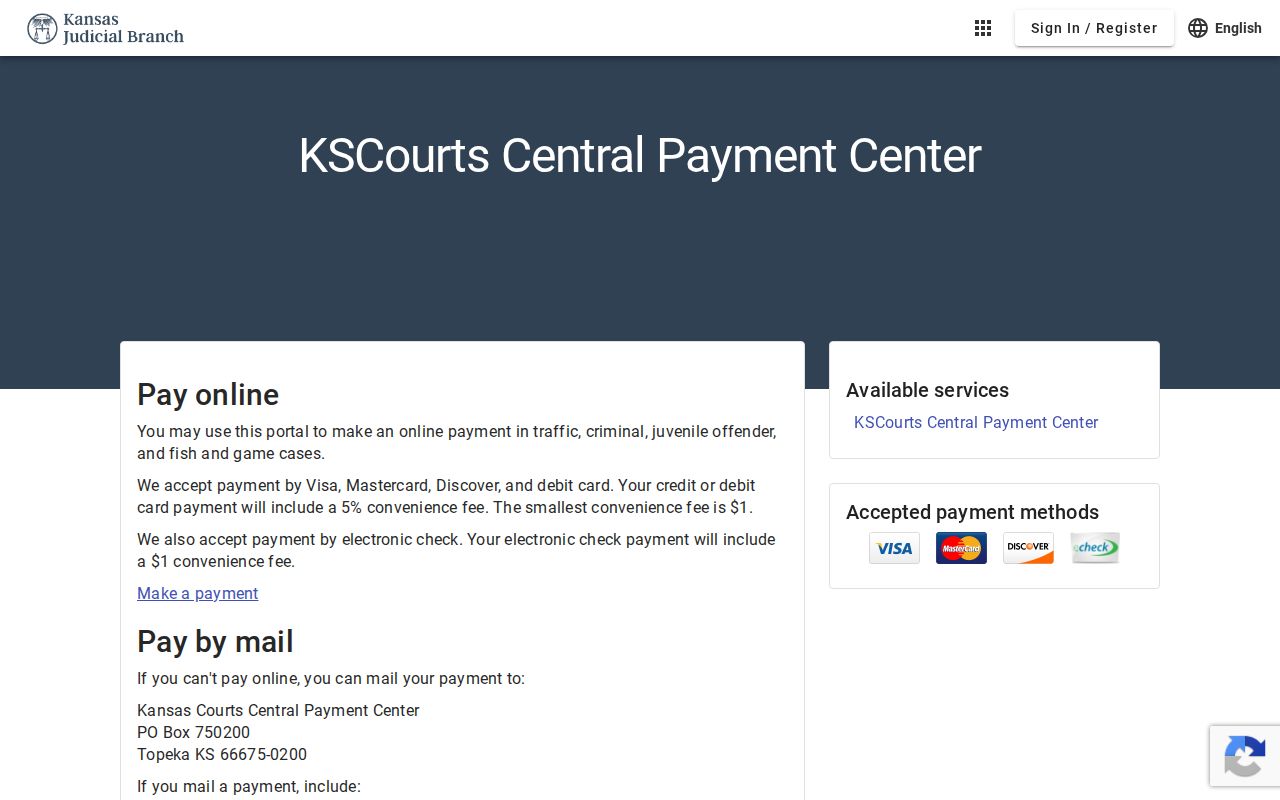
Payment access and court-record access answer different questions, and that distinction matters when you track a case. The linked payment search form lays out its own search choices.
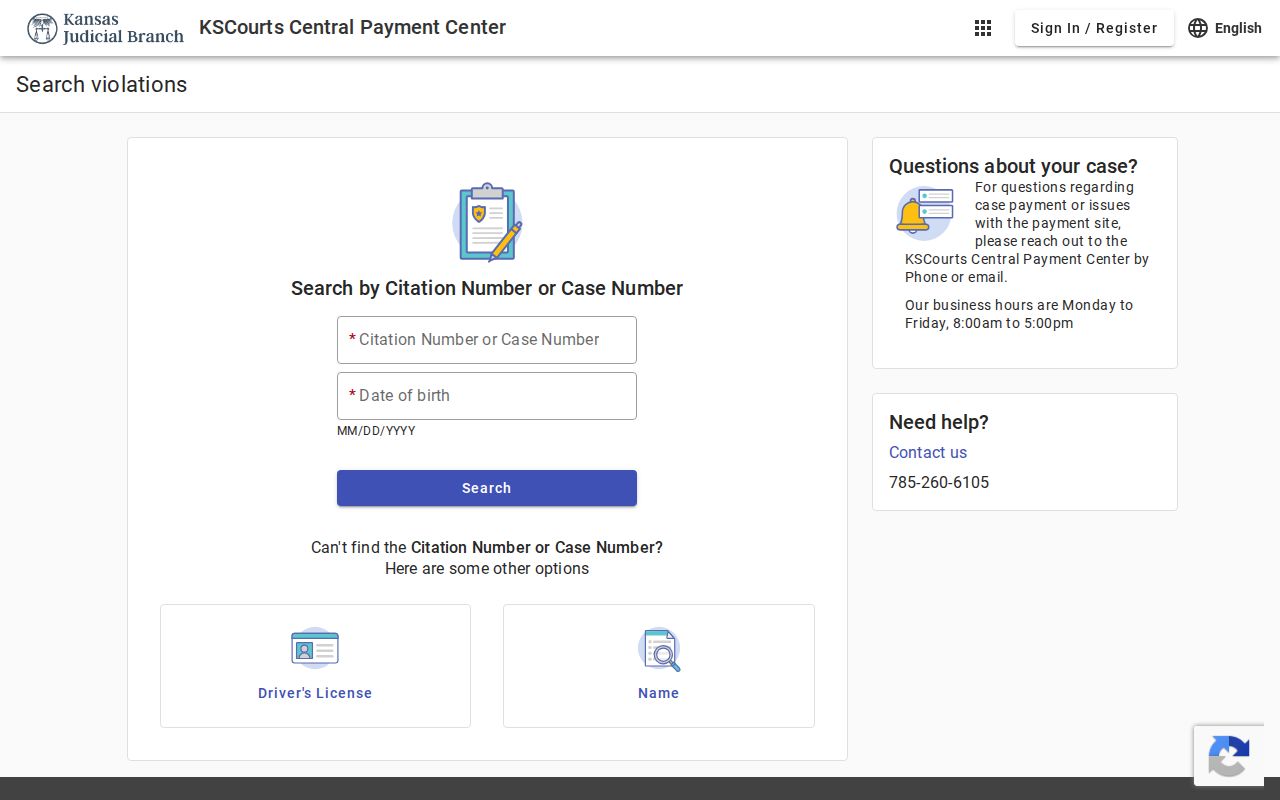
Those fields work for bills, not case files. Track down the payable matter there, then go back to the clerk or CaseSearch for the actual Ford County court docket entry.
Ford County Certification Route
Certified copies come from the Ford County clerk, not from any public portal. Say plainly whether the copy will serve as an official court document. Name each order or judgment that needs a seal or certificate. For a transcript or audio record, ask who handles the order. It may be the clerk or the court reporter. No Ford County transcript price or apostille procedure is posted. Confirm those details directly rather than guessing.
A good written request lists the case number and the document name. Include the filing date if you know it. State whether you want a plain or certified copy. Ask the Ford County clerk about the fee and the delivery method before you send any payment. That habit keeps a useful screen image separate from a copy the court has actually authenticated.
Sealed Records and Public Access
Access to Ford County court records is governed by the Kansas Open Records Act, Kansas Supreme Court Rule 22, and case-specific laws. Open parts of a file can sometimes be separated from exempt parts, though some files or whole categories stay closed. Any request should name the document, ask for whatever portion is not exempt, and request the legal basis if access is denied.
Key Rules:
K.S.A. 45-218 covers inspection, copying, and prompt action on requests.
K.S.A. 45-219 permits written requests and reasonable actual charges.
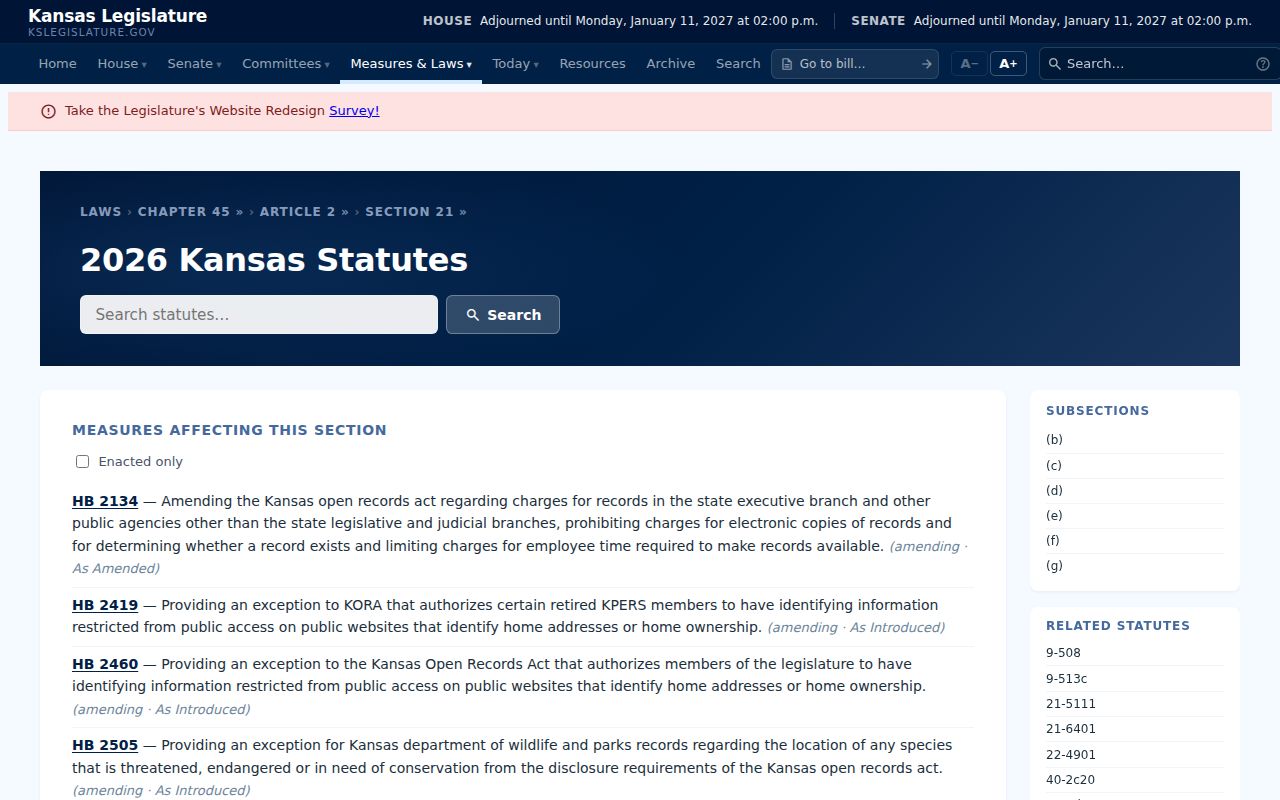
K.S.A. 45-221 lists exemptions and rules for separating closed material.
Official statute views document these rules directly.
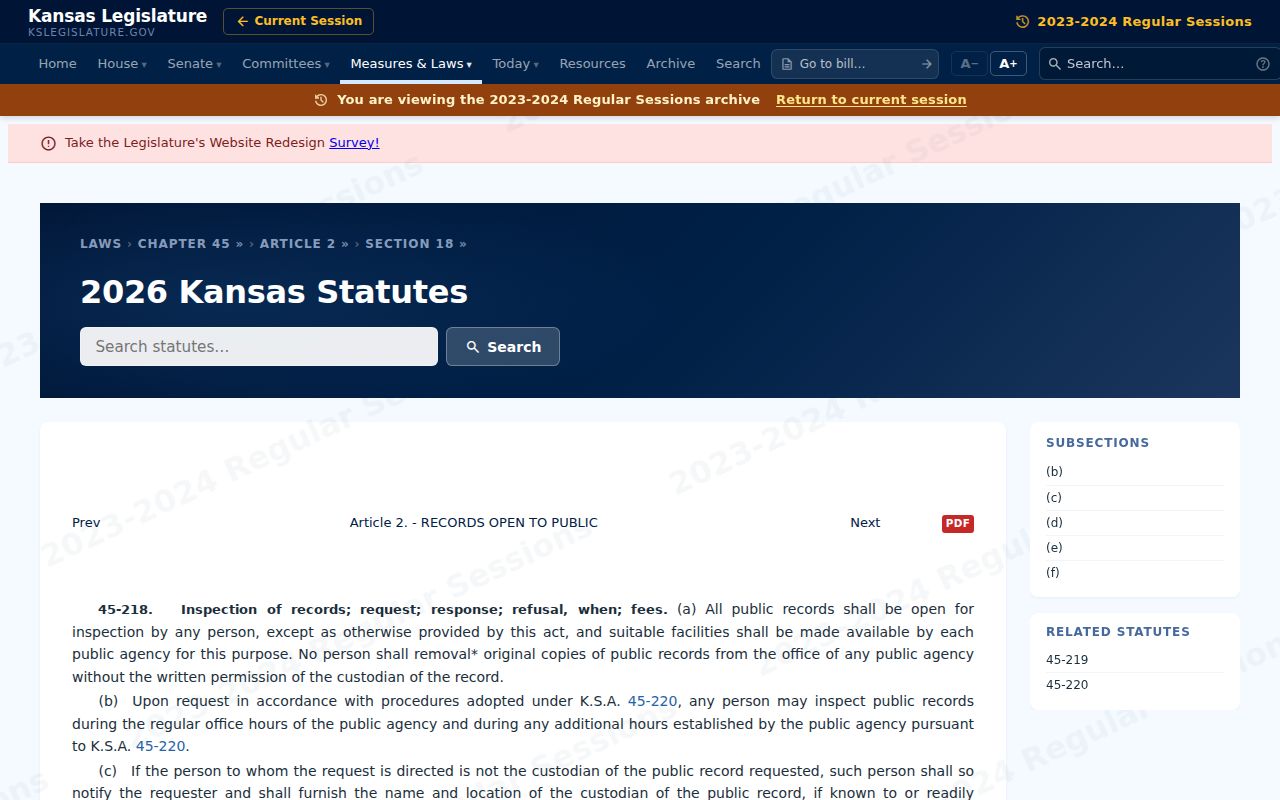
This source supports the request and inspection framework.
K.S.A. 45-219 supplies the fee rule.
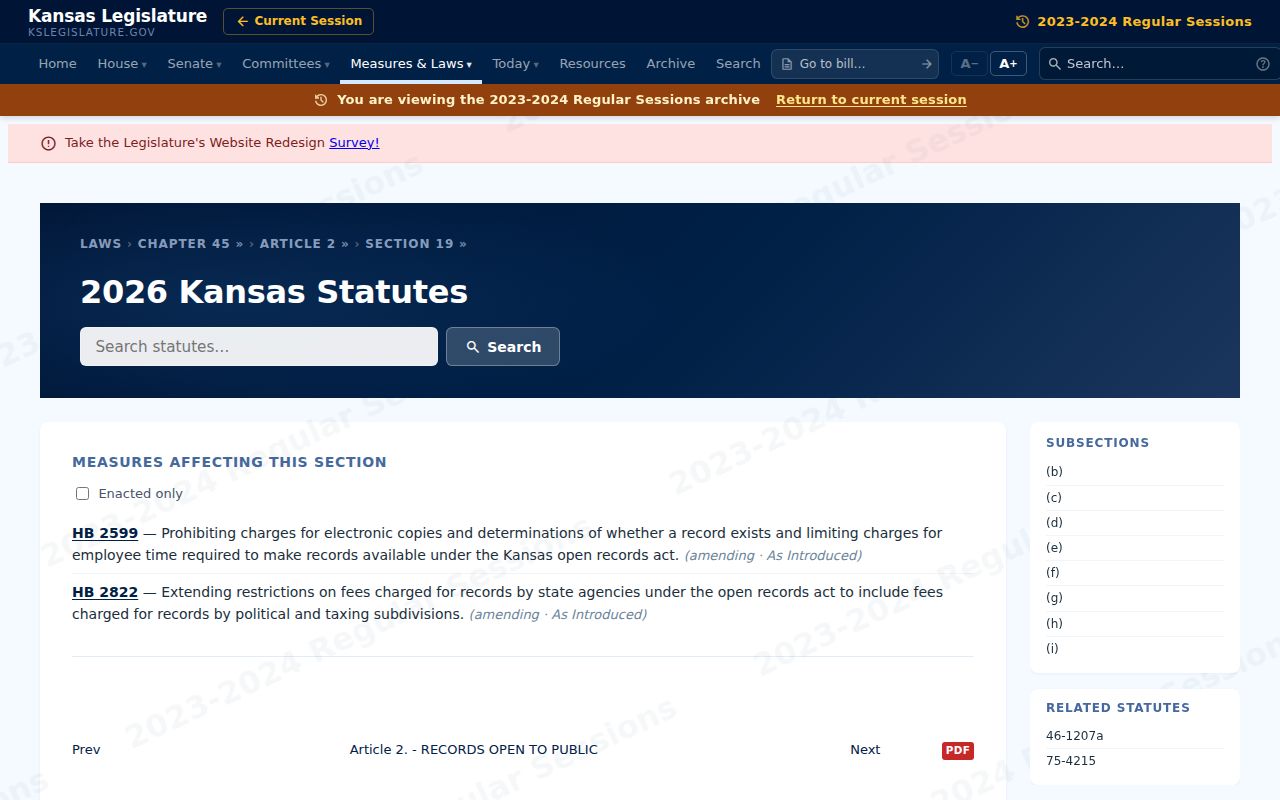
It supports reasonable charges without supplying an invented local price.
K.S.A. 45-221 addresses exemptions.
K.S.A. 28-170 sets the fees a district clerk may charge.
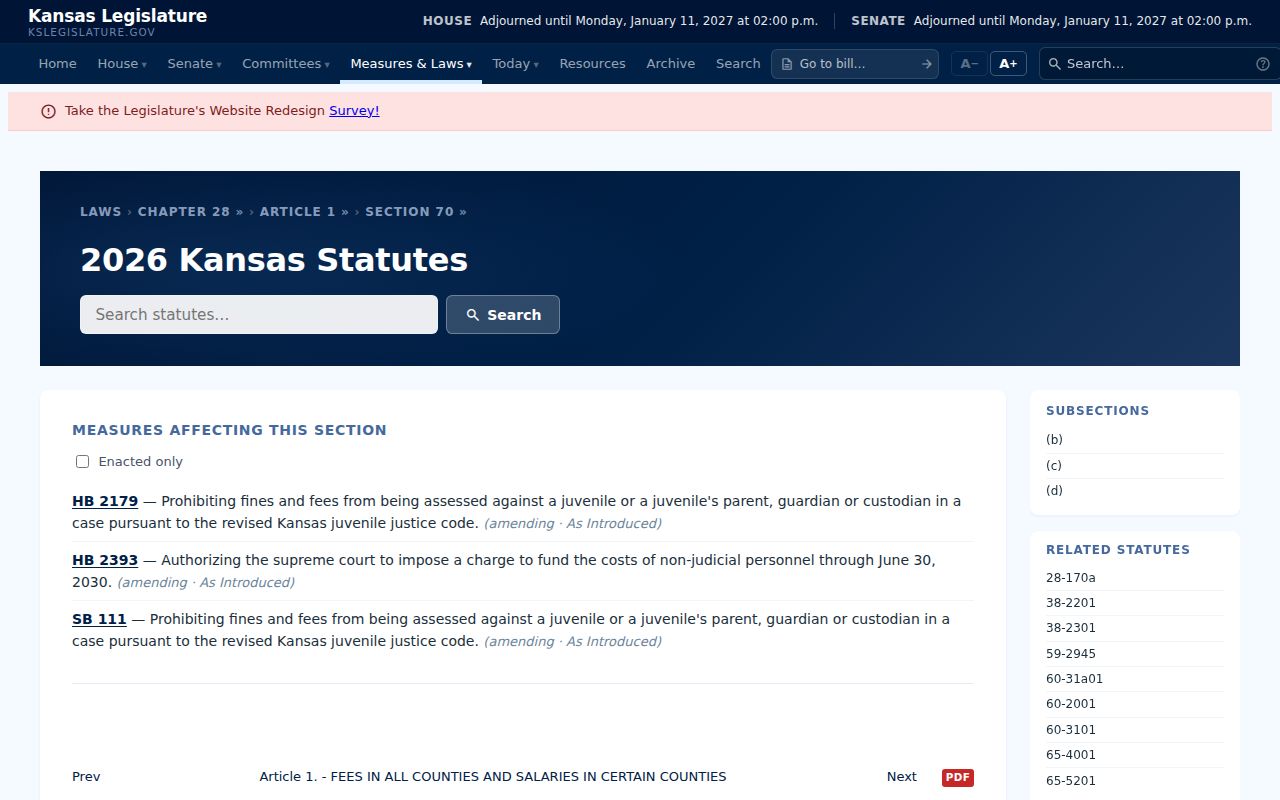
The court, not the legislature, prescribes copy and certification charges. A Ford County case lookup can identify the file first, so the request you send is precise.